The Wellness Table began with a discomfort I could not shake.
For a long time, I had been sitting with the question of why so many important issues affecting our communities were either spoken about quietly, spoken about too late, or not spoken about at all. I had seen this pattern in different ways for years, but it became especially confronting in October 2025, during Breast Cancer Awareness Month. I remember searching, asking questions, looking around, trying to see what conversations were happening within our communities, particularly among African communities, and there was very little. The silence was hard to ignore.
That disappointed me more than I expected.
Not simply because the topic mattered, but because the silence itself revealed and reaffirmed the consistent lack of equitable access within marginalised communities when it comes to educating us about our health. Breast cancer is not distant from us. It is not somebody else’s issue. It affects women we know, women who carry families, women who often continue nurturing everyone around them while quietly neglecting themselves. Yet there seemed to be a lack of urgency, a lack of accessible conversation, and in many ways, a lack of confidence around how to even begin. I found myself questioning whether this came from stigma, from fear, from cultural discomfort around illness, or from the unequal access to information that continues to disadvantage marginalised communities in more subtle ways than people often admit.
The more I sat with it, the more I realised the problem was not only the absence of conversation but the conditions around the conversation.
Too often, when something is organised for our communities, the expectation is that the setting should be modest, functional, and unremarkable. Important discussions are regularly hosted in spaces that feel like an afterthought, as though the people in the room should simply be grateful to be invited at all. That message is never neutral. Over time, it teaches people what level of care they should expect, what level of dignity they should be comfortable with, and how much they are allowed to want before it is labelled entitlement.
That tension and constant push for mediocrity is something I know intimately.
Growing up, I saw elegance, ceremony, etiquette, and prestige represented in ways that were rarely attached to people who looked like me. The most refined events I saw on television, the most formal settings, the language of excellence, the expectation of dress, beauty, and polish, all seemed to belong elsewhere. And within our own communities, wanting those things could be read as trying to be “white”, trying to be something other than yourself, trying to reach for a standard that was never intended for you. Whether it was beauty, elegant dressing, vocabulary, higher education, or simply wanting to inhabit spaces that felt elevated, there was often a quiet policing around it. As though aspiration itself needed to be explained.
Looking back now, I understand this through both lived experience and study. My work and my degree in Youth Work and Criminal Justice have deepened language for things I had felt long before I could name them. I have come to understand how people internalise what their environments repeatedly teach them, how social conditions shape what feels normal, and how systemic exclusion does not only limit material access, but imagination itself. My studies have sharpened what my life already knew: that silence is rarely accidental, that stigma is social, that confidence is cultivated, and that what communities come to accept is often produced by history, inequality, and repeated messages about where they belong.
The Wellness Table came from that intersection of frustration, observation, and refusal.
It was created as a deliberate response to the normalisation of less. Less information. Less urgency. Less beauty. Less expectation. Less dignity. I wanted to create something that did not separate difficult conversations from environments of care. I wanted a space where people of African descent, and others from marginalised communities facing similar barriers, could gather around issues that matter while also experiencing formality, elegance, connection, and depth without apology. Not as imitation. Not as performance. But as reclamation.
The first two gatherings
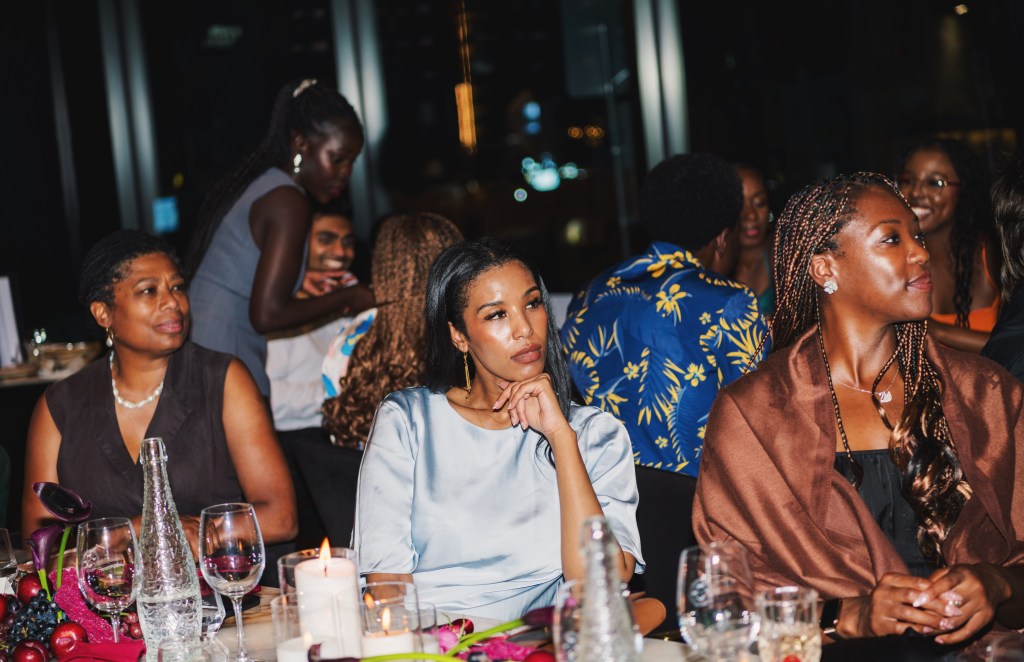
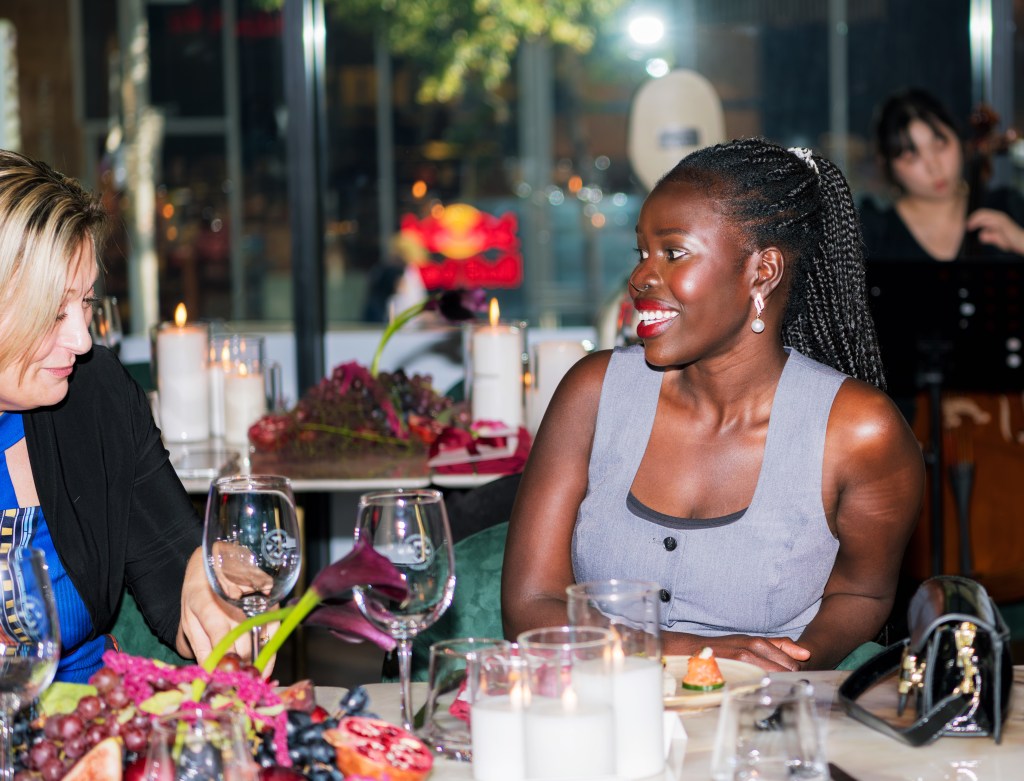
The first gathering, held on 31 October 2025, was the Breast Cancer Awareness Dinner. It was not just about awareness in the generic sense. It was about confronting the silence that had unsettled me. It was about asking what it means when a life-altering illness can move through communities already burdened by stigma, fear, and unequal access to culturally safe information, yet still not be given the level of visible attention it deserves. It was also about care in a broader sense: women’s bodies, women’s health, women’s labour, and the emotional burden so many black women carry while remaining the backbone of families and communities. The night brought together dining, conversation, music, entertainment, and social impact in a way that felt intentional rather than tokenistic. Importantly, it also raised $2,000, which was then donated equally to NAS Recovery Centre and AFRI-AUS iLEAC, extending the evening beyond symbolism and into material contribution.
What stayed with me most, though, was not only the fundraising.
It was the room itself.
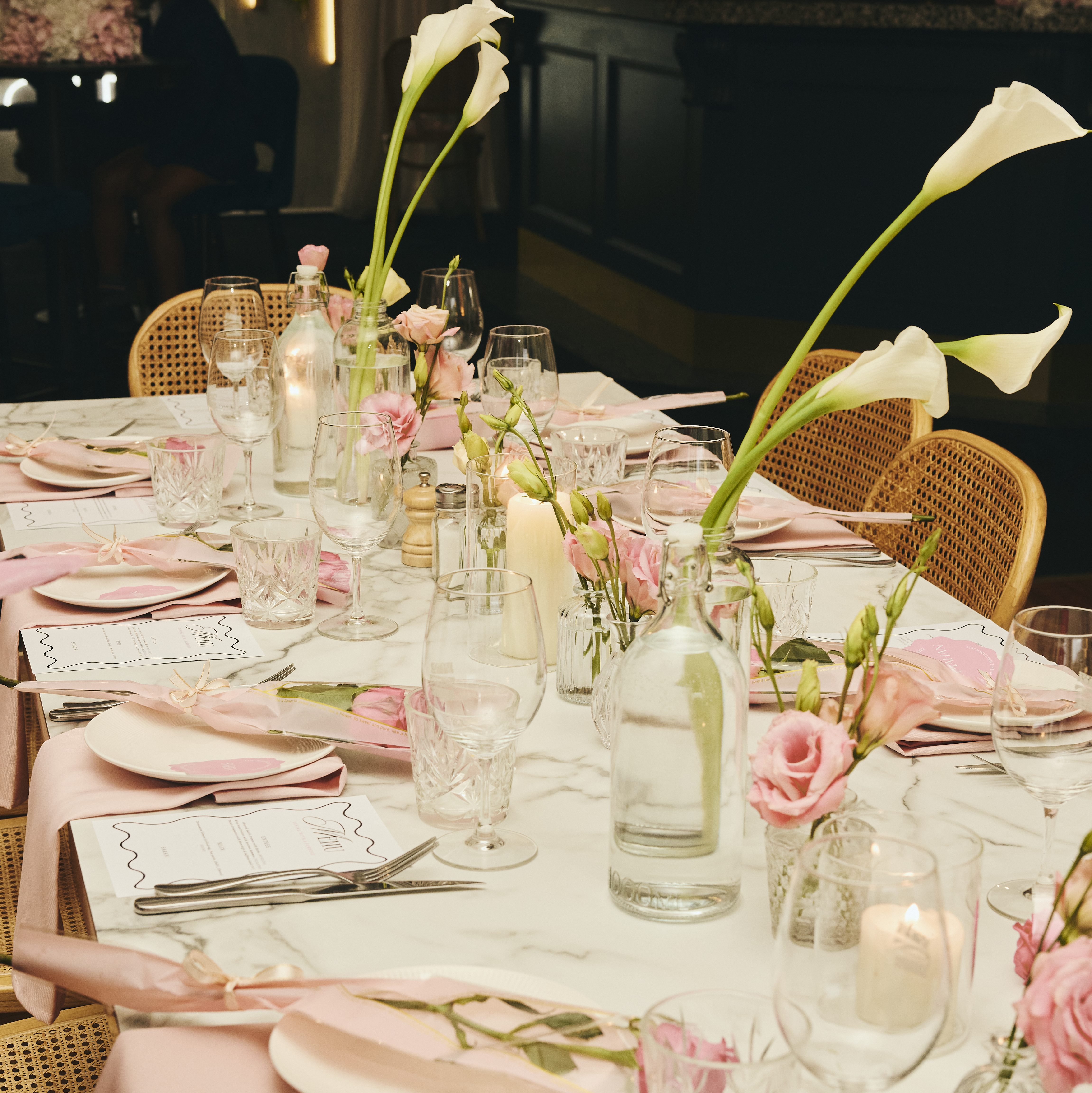
It was the shift in people’s posture once they settled in. The softness that came with being in a space that felt considered. With candles lit, fresh inviting air, and florals that swayed the eyes layer strategically on the table as one would scan the room. The way conversation moved when people were not being asked to engage in an environment that made them feel secondary. I noticed how much more openly people spoke when the setting itself reflected value, thoughtfulness, and cultural appropriateness. That confirmed something I had already suspected for a long time: environment shapes participation. It shapes confidence. It shapes whether people feel they are entering a room to merely attend, or entering a room where they truly belong.
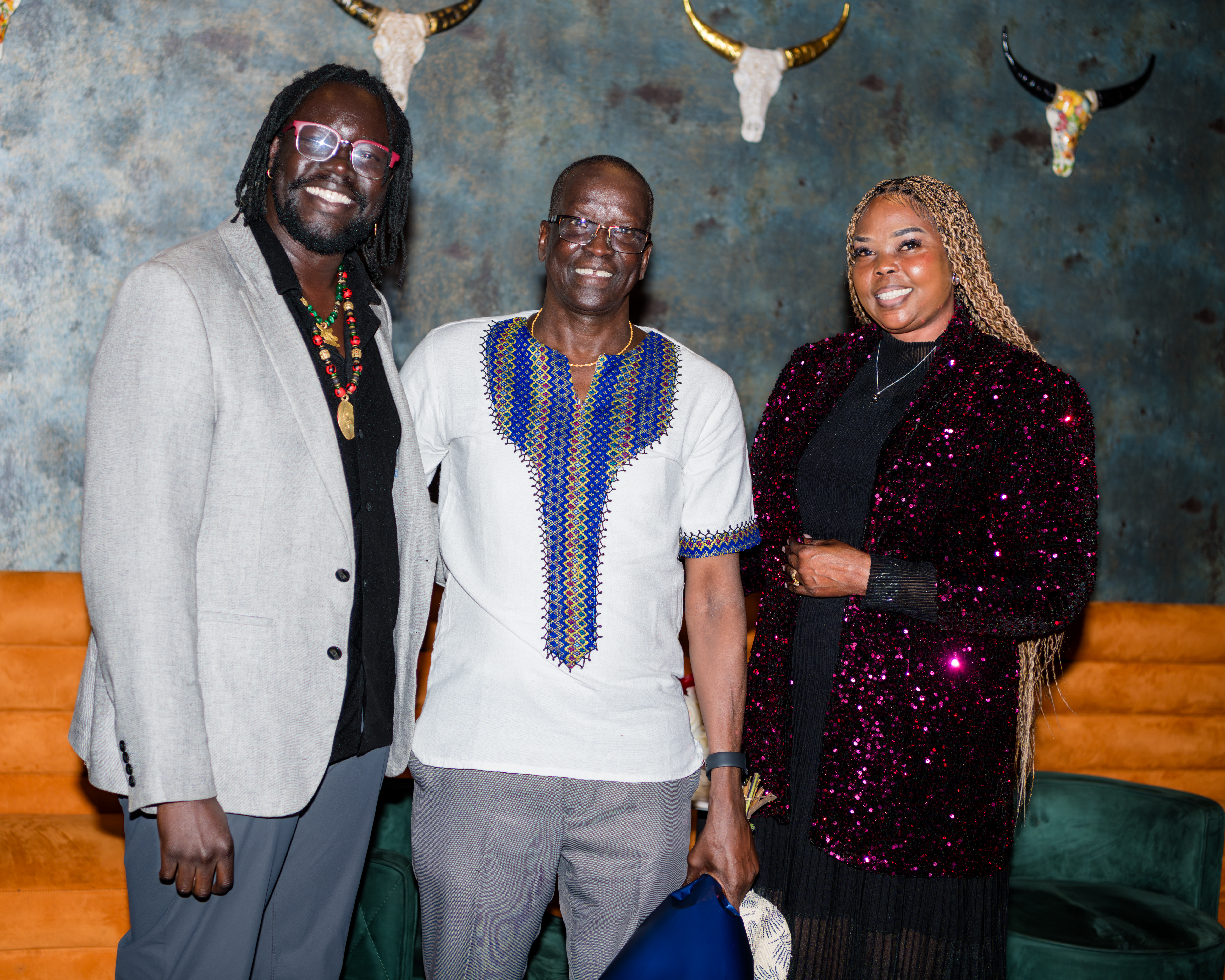
The second gathering, Dining for Education & Equality, was held on 12 December 2025 during Human Rights Week. If the first event centred the silence around illness, the second widened the lens to the structural realities surrounding education, access, and equity. That evening focused on the barriers many students and families face when trying to navigate education systems that are often spoken about as meritocratic, but are in reality deeply shaped by class, race, culture, confidence, and social capital. It explored the unequal ways information circulates, the burden placed on families to “figure it out,” and the consequences of being locked out of networks, language, guidance, and institutional familiarity. It also created space to speak about educational aspiration without shame. For many of us, wanting more has never simply been about ambition; it has involved unlearning guilt, unlearning internalised limitation, and unlearning the idea that excellence belongs more naturally to others.
We were never asking for too much. We were asking from environments that taught us to expect less.
That conversation mattered deeply to me because it sat close to my own life. Coming from a low socioeconomic background, being the first in my family to attend university, and having arrived in Australia in 2005 as a refugee after being born during the Liberian civil war, education was not only a personal achievement for me. It was survival, access, language, legitimacy, and a way of contesting what had already been decided about who I was allowed to become. Experiencing neglect, and the absence of consistent advocacy as a child, taught me early what it means to move through systems without being seen and, more importantly, what I refuse to replicate.
I remain deeply grateful to Australia for the safety, education, and opportunities that made healing possible, even as I continue to navigate the barriers that persist. That tension, gratitude, alongside critique sits at the centre of how I think, how I work, and how I build.
We were never asking for too much. We were asking from environments that taught us to expect less.
The two Wellness Table events were different in focus, but deeply connected in spirit. One centred health, silence, stigma, and women’s wellbeing. The other centred education, equality, aspiration, and social access. Both were concerned with what happens when communities are denied not only resources, but conditions that make dignity feel normal. Both were rooted in the belief that people engage differently when they are in spaces that reflect care. And both challenged the idea that conversations about serious social issues must happen in stripped-back, uninspired, or visibly under-valued environments.
That is part of the politics of The Wellness Table.
It is not just about hosting beautiful events. It is about challenging what marginalised communities have been taught to accept. It is about refusing the idea that elegance, etiquette, prestige, language, and thoughtful design belong only to the upper class, or to whiteness, or to people who have never had to fight for visibility. It is about understanding that the setting itself communicates worth. And when people repeatedly experience environments that communicate neglect, they begin to internalise it. But when they experience something else—something considered, cultivated, and dignified—it can quietly begin to shift what feels possible.
My years across youth mentoring, community advocacy, anti-racism work, cultural leadership, and mental health programming have shown me how often people are asked to navigate systems without ever being given equitable access to the language, confidence, information, or support required to move through them well. That is true in health. It is true in education. It is true in justice. It is true in community life. The Wellness Table sits within that broader understanding. It is one response among many, but it is an intentional one. It is where dialogue, beauty, critique, and community meet.
What I have built through The Wellness Table is not just an event series. It is a way of asking a different question.
What happens when we stop building around scarcity, and start building from the assumption that our communities deserve depth, dignity, information, beauty, and access all at once?
That is the question I am still following.
Hi Yaseen,
Thank you so much for the thoughtful message.
I’ve just uploaded a new blog reflecting on my participation at the National Walk for Truth on Sunday, 19/04. Please feel free to read.
Deeply touching story beautifully written Saran.. hats off to your resilience. I am sure your parents are very proud of you and love you.. I Look forward to more of your stories. Cheers
Saran, I want to say thank you for sharing this vulnerable side of who you are and a glimpse of what your life has entailed.
Experiencing how big of a heart you have, I would have never guessed that you’ve never truly felt love yourself. It takes healing to be able to openly share this. Thank you for reminding some of us that just because the trajectory of our lives may have been different, this does not mean that everybody else had the same outcome.
My deepest love to you Saran.
This is so touching Saran, wow. We truly don’t know people’s struggle until we listen closely without judgement.





Leave a Reply